HU—MAN²
Experimental Identity & Typographic System
Overview
HU-MAN² is a self-initiated conceptual typographic project exploring how artificial intelligence increasingly mirrors human output, and how that resemblance alters the way we recognise, trust, and interpret what we see.
The work interrogates a simple question:
What happens when recognition is no longer automatic?
Rather than presenting AI as spectacle or threat, the project focuses on the quieter erosion of certainty, the moment where something appears human enough to pass without scrutiny.
Concept
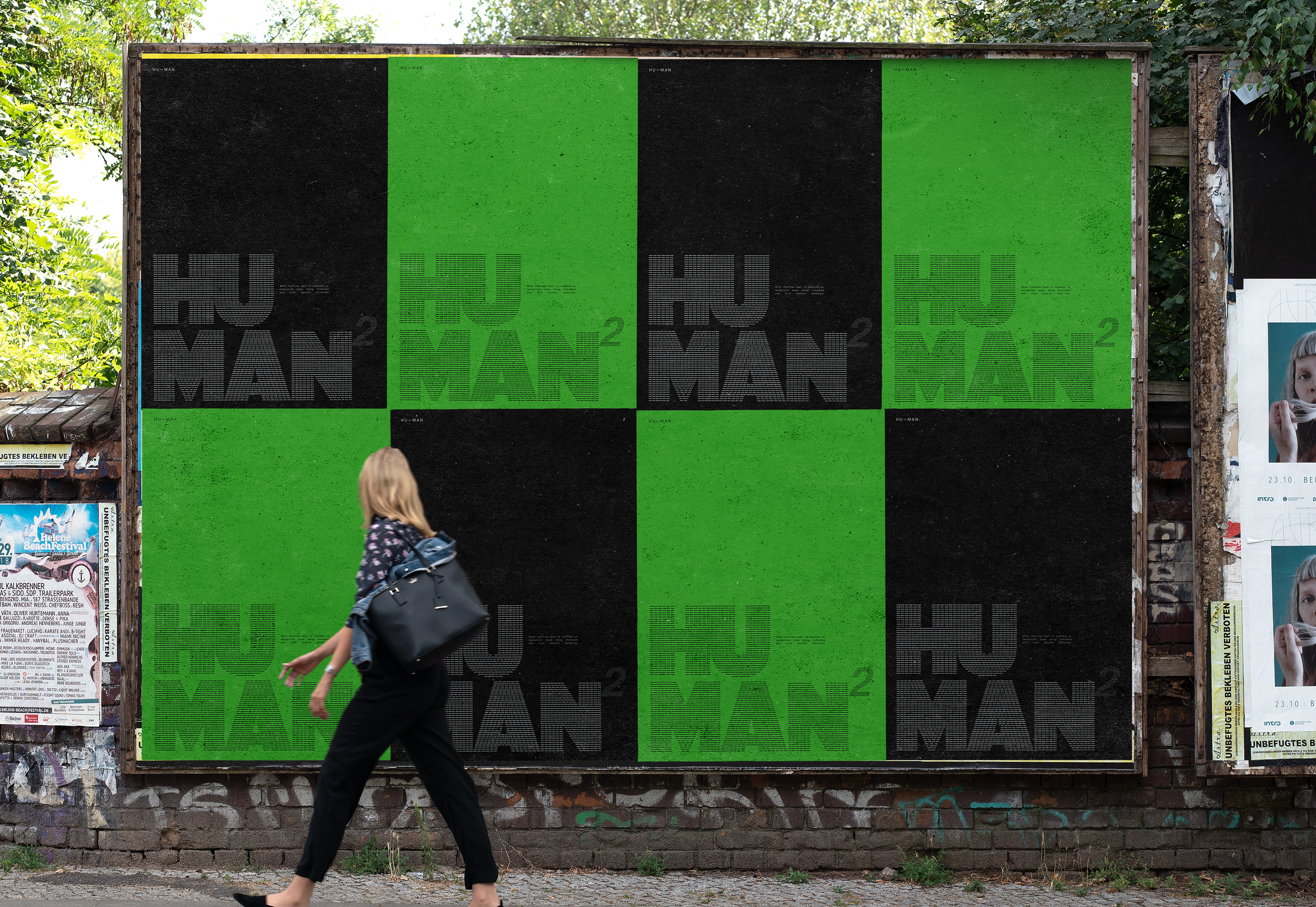
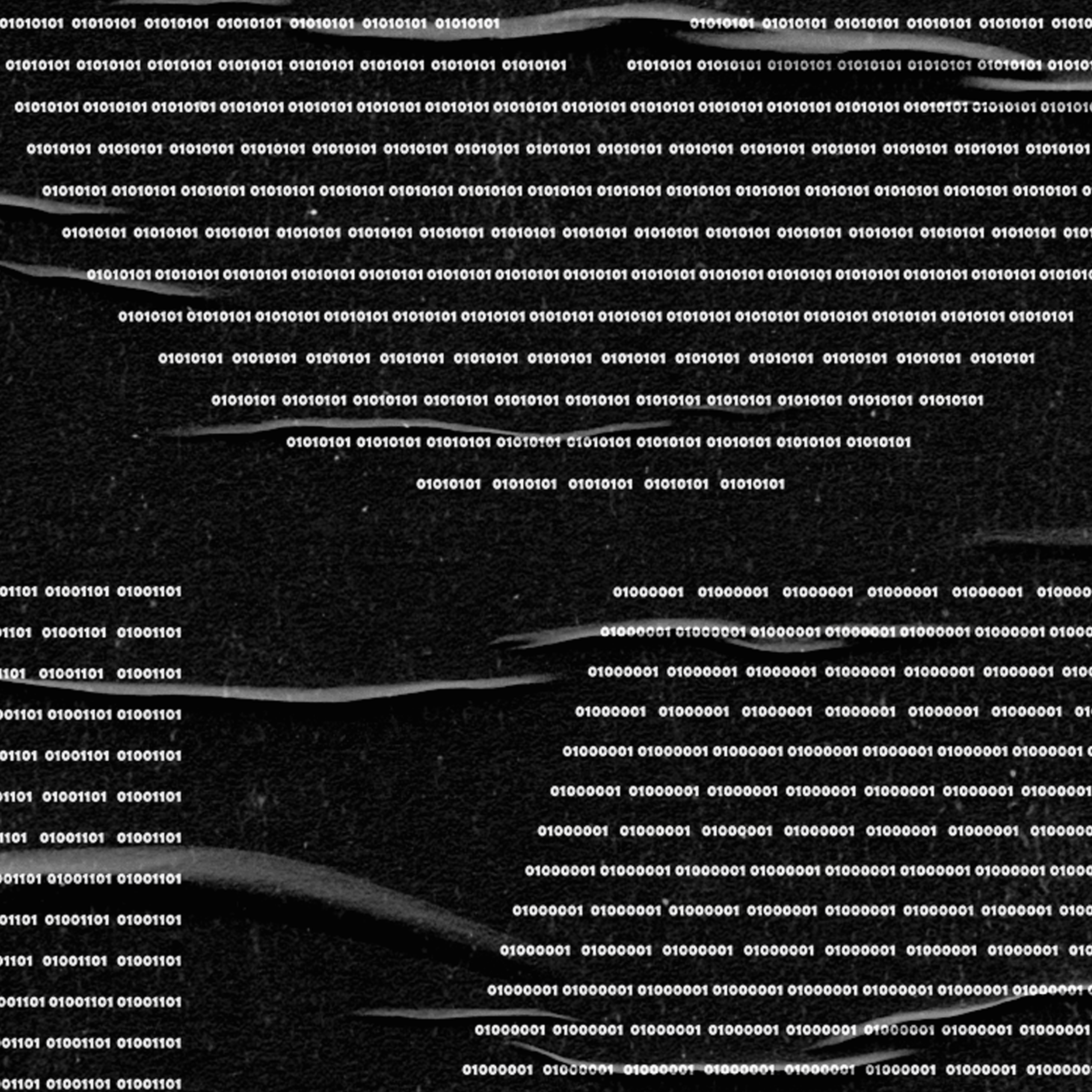
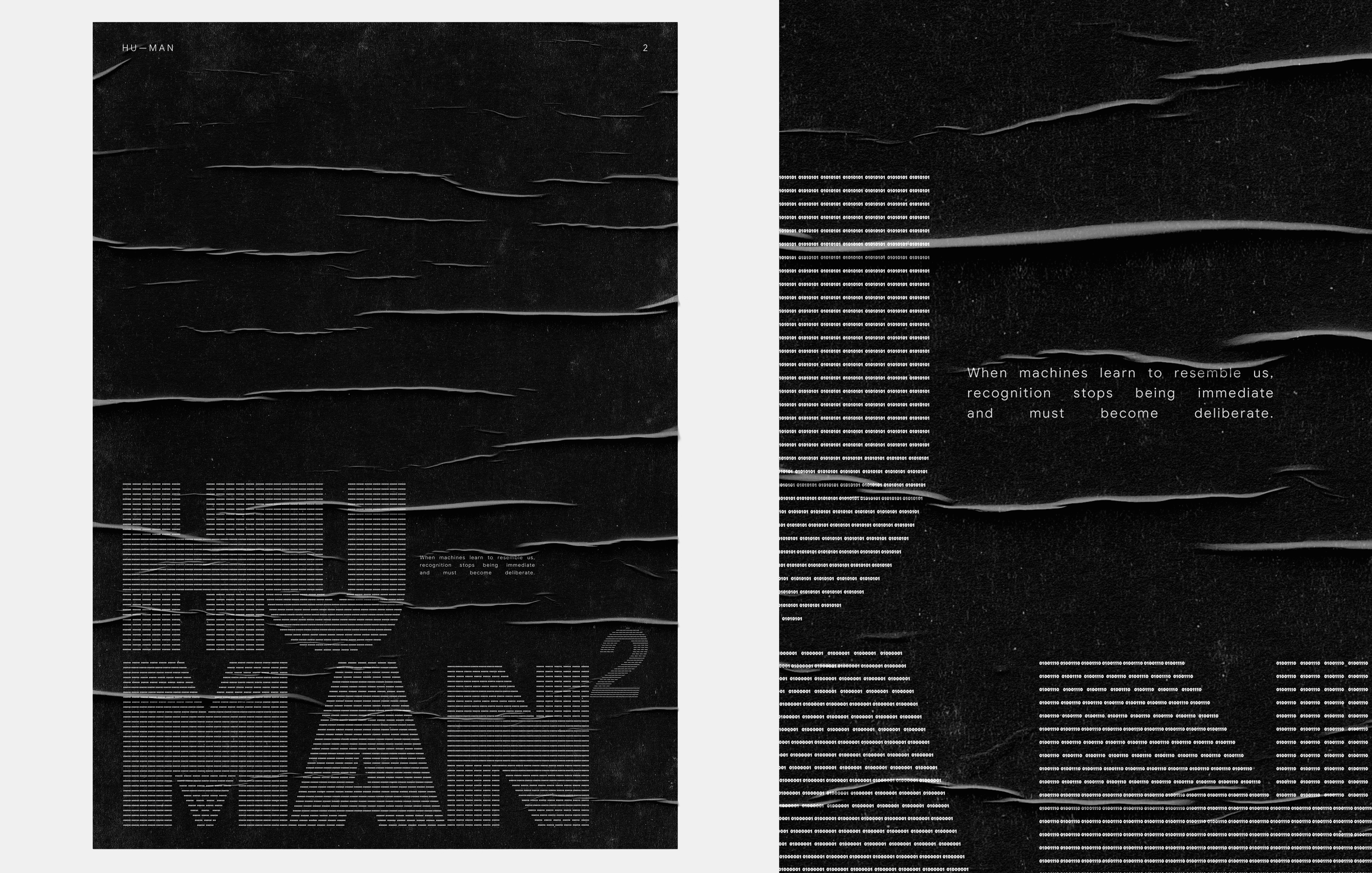
The word HU-MAN is constructed from the binary encoding of each individual letter, with that code iterated to form the full letter shapes. From a distance, the typography reads as solid, complete, and familiar. Up close, it resolves into code.
That perceptual shift is the core of the project.
It mirrors how machine-generated content often functions in contemporary culture: legible, convincing, and easily accepted until examined more closely. The work suggests that in a machine-saturated environment, recognition can no longer be passive, it must become deliberate.
The viewer’s act of moving closer, slowing down, and reassessing is not incidental. It is the message.
The Role of “²”
The superscript 2 operates on multiple levels.
On the surface, it references binary logic and the foundational 0/1 structure of computation. Conceptually, it suggests duplication, squaring, and iteration, the act of replication rather than origin.
Crucially, the 2 is not a letter. It sits beside language without fully belonging to it, creating a small but intentional fracture in the word’s human certainty. This refusal to integrate cleanly reinforces the idea that AI remains adjacent to humanity, convincing but incomplete.
Typography and Form
The typographic system is designed to oscillate between clarity and unease.
The dense binary construction allows the letterforms to hold together visually, but never fully settle. In some variations, the binary is clean and ordered, reinforcing legibility. In others, it becomes disrupted, fragmented, or overwhelming, pushing the viewer toward visual fatigue and ambiguity.
This instability is deliberate. It reflects probability, uncertainty, and the non-human logic underlying machine systems, structures that appear ordered while operating beyond intuitive human reasoning.
The result is typography that feels familiar at first glance, but increasingly spectral the longer it is observed.
Perception as Content
Rather than relying on illustrative metaphor, HU-MAN² uses perception itself as material.
The work is not about AI as an object, but about how we encounter it. The distance at which the work is viewed determines what it communicates. Meaning is not fixed in the form, but produced through attention.
In this way, the project positions the viewer as an active participant, responsible for recognising, questioning, and interpreting what appears human.
Context and Intent
HU-MAN² was developed as a conscious move away from surface-level commentary on AI. Instead of dramatizing technology, the project examines the subtle psychological shift it introduces, the quiet normalisation of machine output and the diminishing friction between human and artificial authorship.
It also served as a test of restraint: reducing the palette, limiting graphic devices, and allowing structure and logic to carry the concept. The ambition was not visual noise, but conceptual density.
Outcome
HU-MAN² functions as a flexible typographic system rather than a single artwork. The identity scales and adapts based on viewing position across posters and layouts while retaining its conceptual core.
More importantly, it demonstrates an approach to design that prioritises perception, structure, and critical intent. The project shows how typography can operate not just as communication, but as a mechanism for questioning how meaning is formed in an increasingly automated world.
Binary details up close