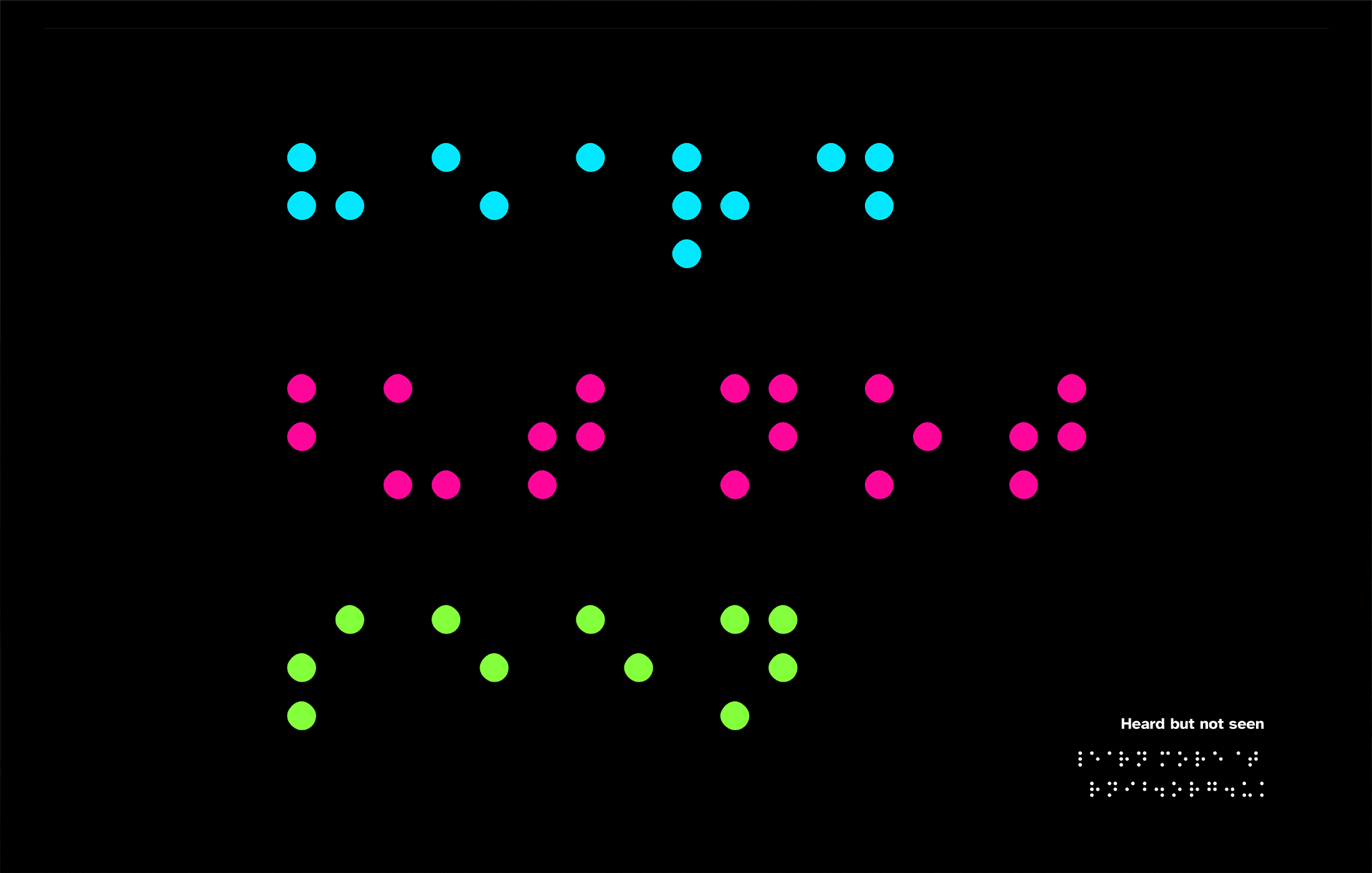
Heard but not Seen

Conceptual Awareness Campaign, Personal Project

Overview

Heard but not Seen is a self-initiated conceptual awareness campaign exploring the lived experience of people with sight loss in the UK. The project deliberately subverts the familiar phrase “seen and not heard”, flipping it to expose a social reality in which voices exist within systems designed primarily for the sighted.

The campaign is not about visibility as spectacle, but about who design systems are built for, and who is expected to adapt to them.

The Idea

Over 2 million people in the UK live with some form of sight loss, yet their presence is frequently overlooked, misunderstood, or reduced to accommodation rather than agency. The campaign asks a simple but uncomfortable question:

Will you see them?

Rather than communicating this passively, the work is designed to introduce friction. The viewer is required to slow down, adjust, and work harder to read and interpret the message. This resistance mirrors aspects of visual strain and partial accessibility. The discomfort is intentional.

Empathy is not explained. It is experienced.

Conceptual Approach

The campaign is built around contradiction.

The title Heard but not Seen initially reads incorrectly, forcing a moment of hesitation. That pause, the need to reprocess the phrase, is deliberate. The act of rereading becomes part of the message.

This friction reflects the ongoing cognitive and physical effort required by people with visual impairment to navigate environments that were not designed with them in mind. Rather than describing exclusion, the design briefly places the viewer inside it.

Typography

The campaign uses Atkinson Hyperlegible, a typeface developed to improve legibility for people with low vision.

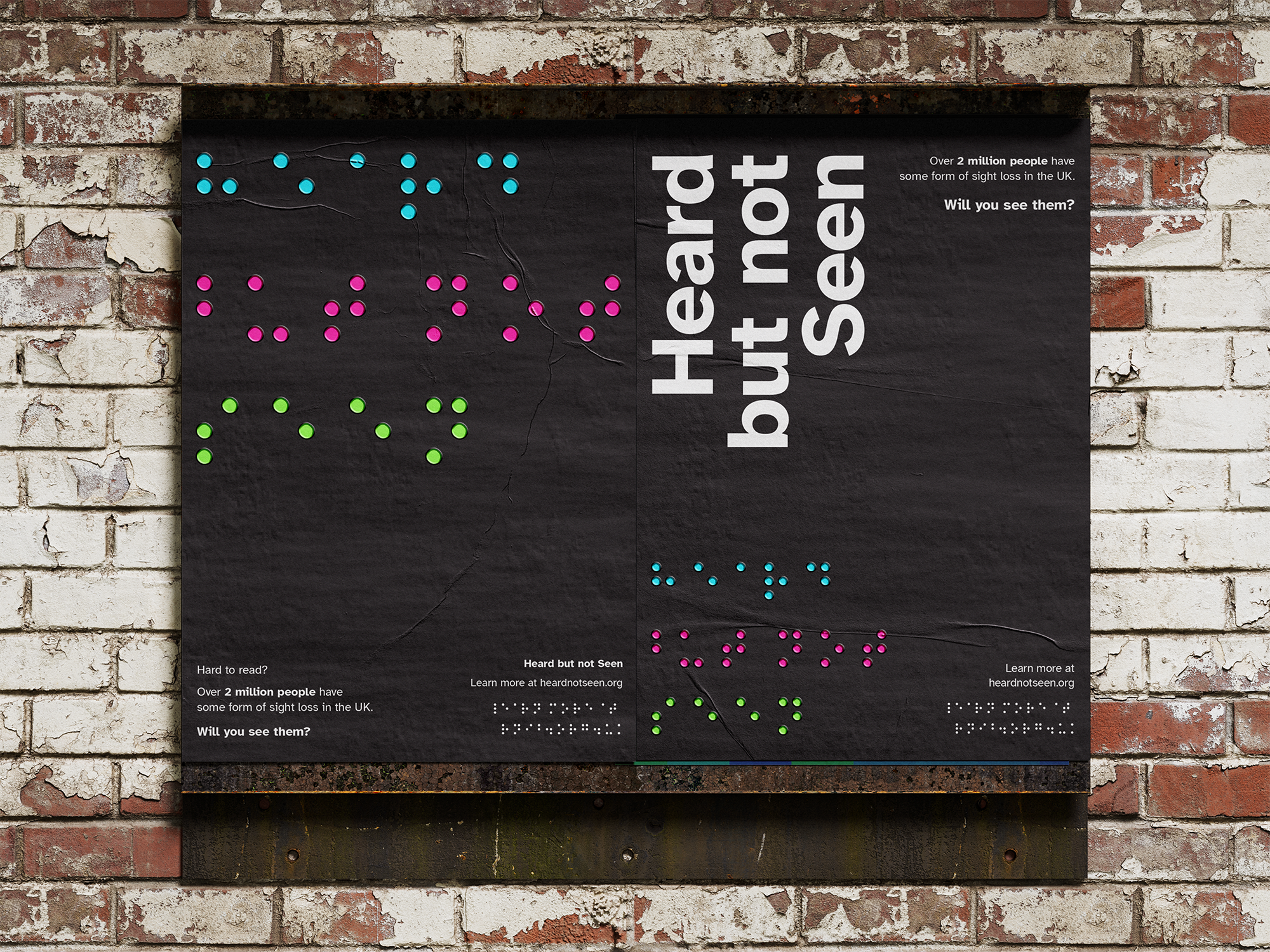
Its use is intentionally ironic. One of the most readable typefaces in the world is paired with disrupted hierarchy, broken grid alignment, and unconventional scale relationships. This contrast highlights the gap between technical accessibility and felt accessibility.

Legibility alone does not equal inclusion.

Braille as Structure

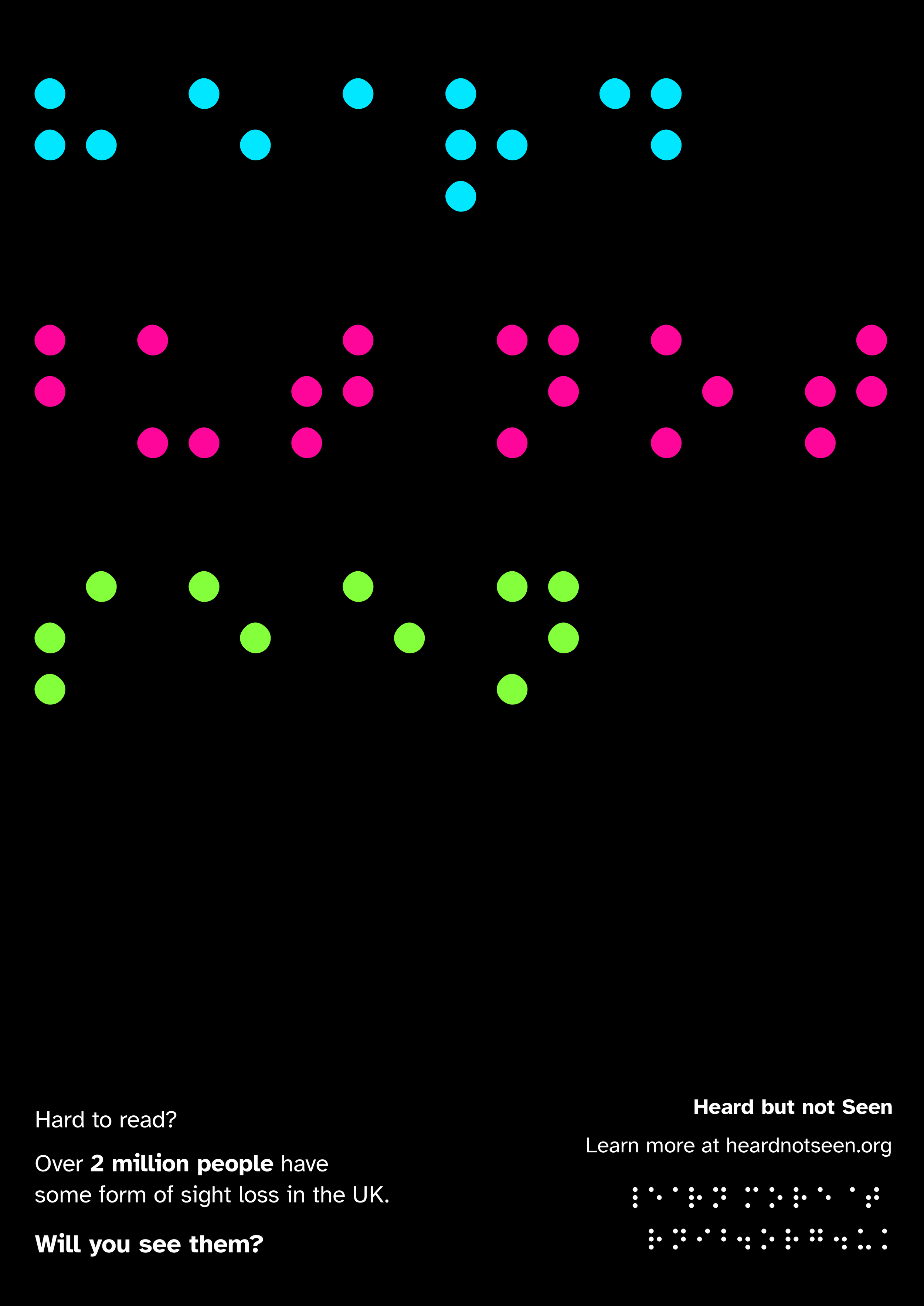
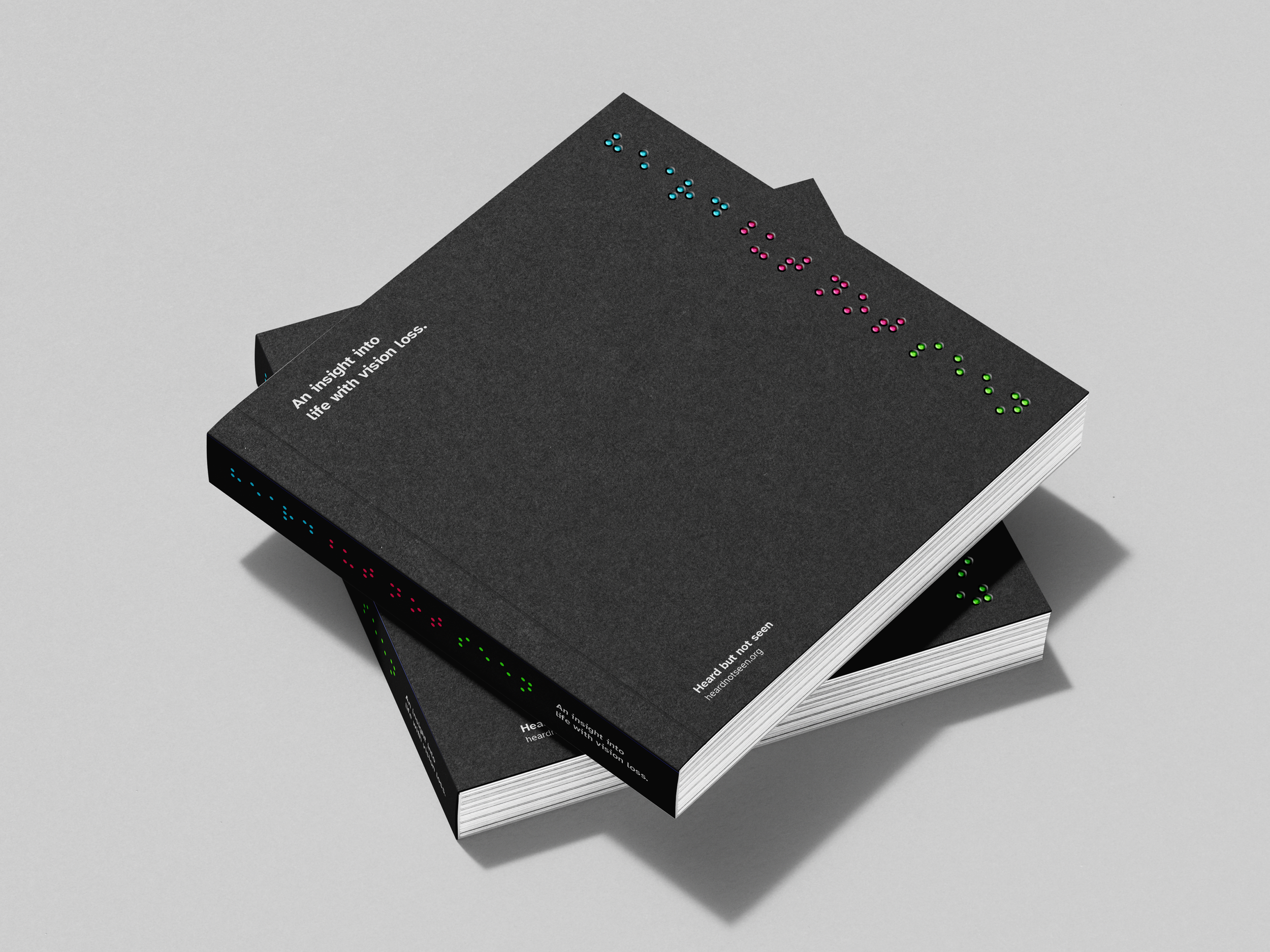
Braille is treated as primary content rather than a supporting device. It is not placed beneath text as annotation, but elevated in scale, colour, and presence.

This hierarchy deliberately reverses conventional accessibility design, where braille is often added as a functional afterthought. Here, it becomes the dominant visual language of the campaign.

There is an intentional contradiction in this choice. The braille is expressive, vivid, and central, despite being unseen by those it represents, while the written text remains neutral and understated. This imbalance reflects how accessibility is often approached culturally, acknowledged, but rarely centred.

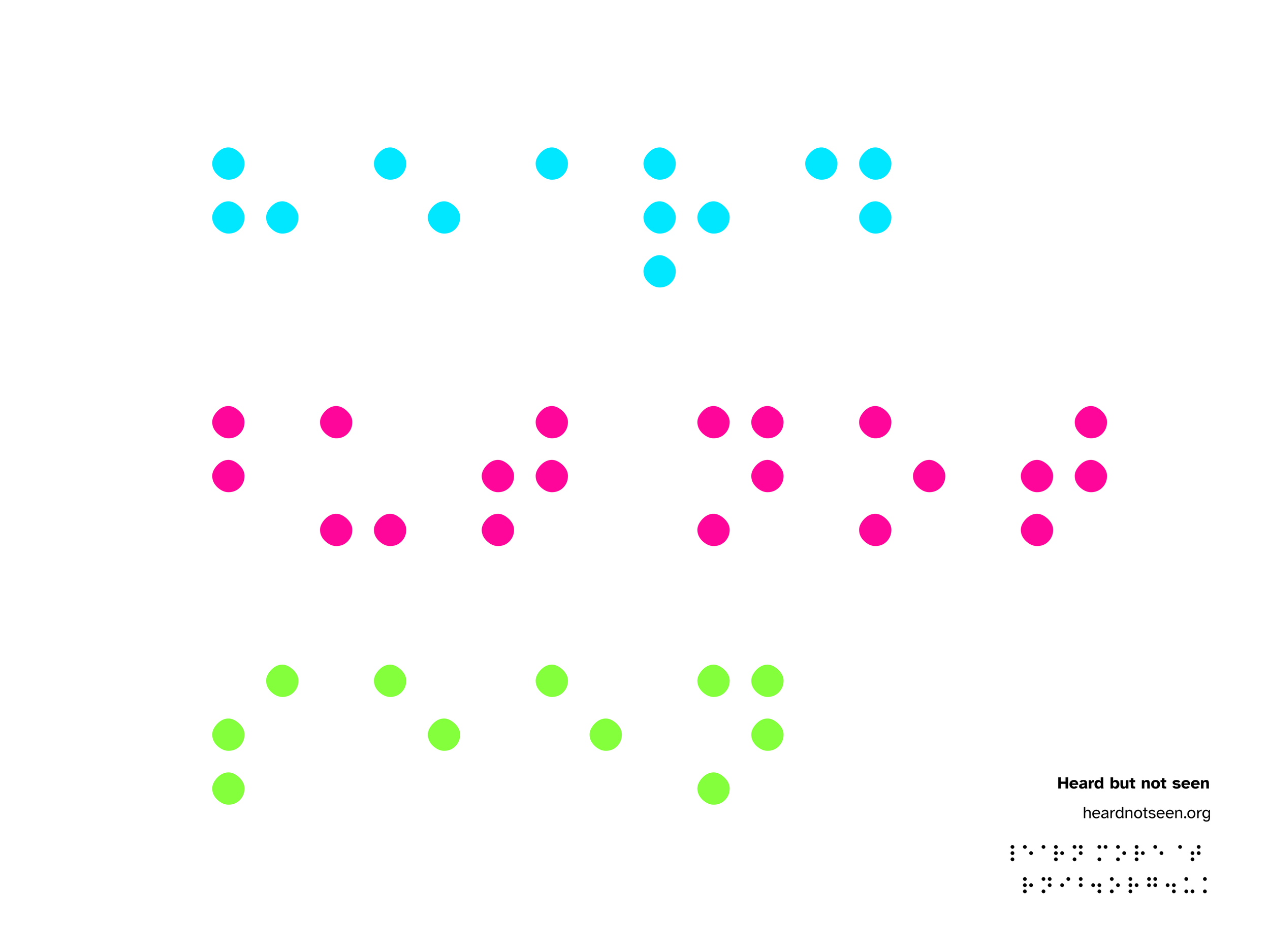
The braille is arranged in horizontal bands that read simultaneously as language and rhythm. These patterns also reference sound waves, reinforcing the idea of “heard” as something physical, persistent, and present, even when unseen.

Colour

Highly saturated cyan, magenta, and green were selected for their legibility against black, but also for what they represent conceptually. These colours are rarely associated with “safe” or serious accessibility design.

By placing them at the centre of the system, the campaign rejects visual politeness and conventional hierarchy. The restrained white typography recedes, while the coloured braille carries visual weight, reinforcing the idea that written language is secondary here.

On a personal level, this palette was also a conscious risk, a departure from safer, client-led colour systems, used to push the work beyond comfort and familiarity.

Grids and Friction

Headlines break alignment, scale shifts interrupt rhythm, and spacing is used to create pauses rather than flow.

The grid becomes something to push against rather than rely on, echoing the campaign’s central question: who are systems designed for, and who is forced to adapt to them?

Intent and Personal Motivation

This project was an intentional departure from safety and approval.

I wanted to create work that prioritised thinking over reassurance, empathy over ease, and concept over polish. I have long been fascinated by braille as both a language and a visual system, and this project gave me the space to explore it with care and intent.

Rather than designing to accommodate an audience, I wanted to design with consequence, allowing irony, awkwardness, and friction to do the communicative work. The aim was not to please, but to provoke reflection.

Outcome

Heard but not Seen operates as a flexible campaign system rather than a single poster. The visual language scales across formats while retaining its conceptual core.

More importantly, the project demonstrates an approach to design rooted in intention, restraint, and empathy, using form not just to communicate a message, but to embody it.

Previous
Previous

CUBS

Next
Next

Wall Text